
 Français
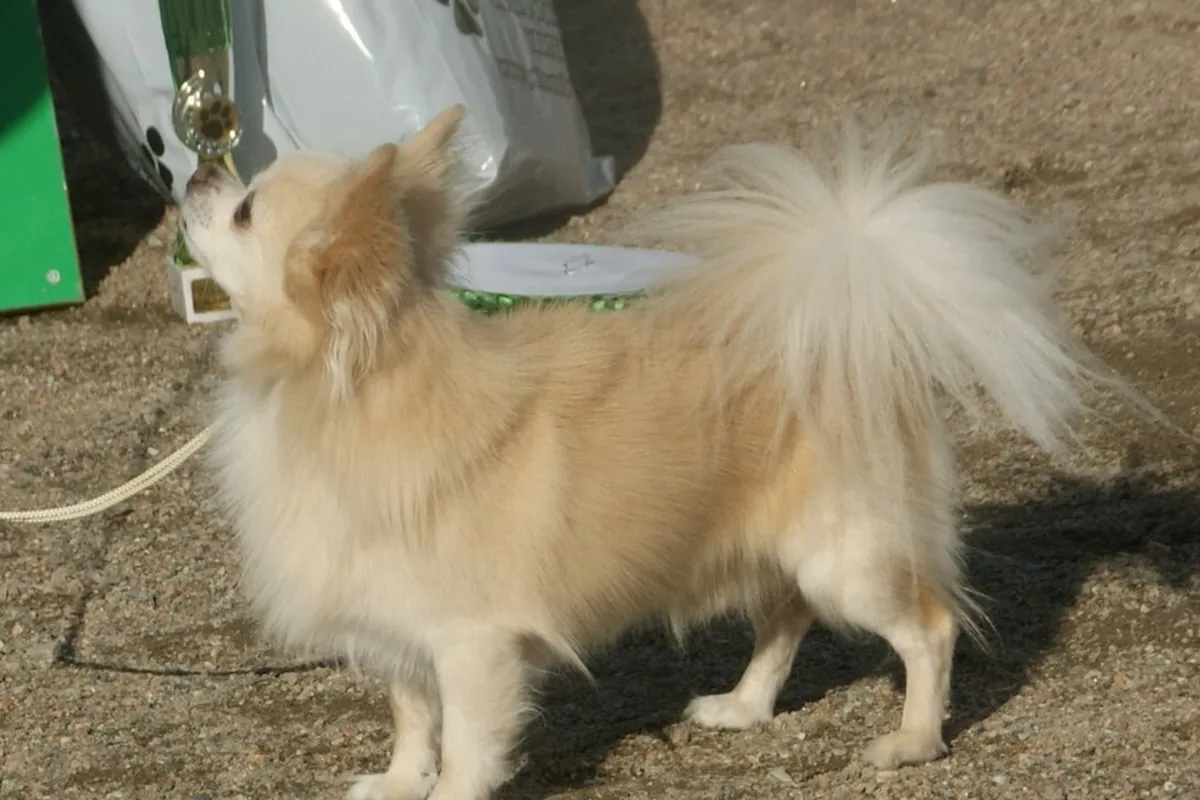
Chihuahua at a glance
| Trait | Detail |
|---|---|
| Origin | Mexico [1] |
| Breed group | FCI group 9 (companion and toy dogs), section 6 [1]; AKC Toy Group [2] |
| Weight | 2.2–6.6 lb (1–3 kg), ideally 3.3–5.5 lb (1.5–2.5 kg) [1]; UK pet Chihuahuas had a median adult weight of 7.5 lb (3.4 kg) [3] |
| Height | 5–8 in (13–20 cm) [2] |
| Life expectancy | 7.9 years at birth in a UK life table, with a wide spread of lifespans [4]; median age at death 8.2 years in a young UK population [3] |
| Coat | Two varieties: smooth (short) and long-haired; all colors except merle [1] |
Origin
The breed standard describes the Chihuahua as the smallest pedigree dog in the world, named after the largest state of Mexico. Its ancestors are thought to have been wild dogs domesticated at the time of the Toltec civilization; statues of a small dog called the Techichi, found in Tula, closely resemble today’s Chihuahua [1].
In the UK, Chihuahuas made up 3.46% of dogs under veterinary care in 2016, and their share of puppies born each year rose from 1.01% in 2005 to 5.35% in 2016 [3].
Common health problems
- Teeth: periodontal disease was the most common disorder (13.5% of Chihuahuas in one year), and retained baby teeth were found in 5.7% [3].
- Weight: obesity was recorded in 5.9% [3].
- Kneecaps: Chihuahuas had 5.9 times the odds of crossbred dogs of patellar luxation [5].
- Heart valves: Chihuahuas had 6.2 times the odds of crossbred dogs of a diagnosis of degenerative mitral valve disease [6], and heart disease was the most common cause of death (18.8%) [3]. See heart failure in dogs.
- Causes of death: after heart disease came lower airway disorders (16.3%) and traumatic injury (13.8%) [3].
- Sex difference: females lived longer than males (median 10.2 versus 6.9 years at death), and males had higher odds of heart murmur among other disorders [3].
Blood work, urine and screening in Chihuahuas
There are no published Chihuahua-specific reference intervals for routine blood tests. The points below are predispositions that can show on tests.
- Low blood sugar in puppies: juvenile hypoglycemia usually affects toy and small-breed dogs and is thought to come from an immature liver with small glycogen stores [7]. See blood sugar in dogs.
- Liver causes of low sugar: severe liver disease and portosystemic shunts can also cause hypoglycemia [7]. See liver shunt in dogs.
- Bladder stones: in 14,008 UK stones, Chihuahuas were over-represented for calcium oxalate stones [8]. See bladder stones in dogs and urinalysis.
- Breathing assessment: the Chihuahua is one of the breeds covered by the Kennel Club and University of Cambridge Respiratory Function Grading Scheme for BOAS [9]. In a study of 14 breeds including the Chihuahua, almost every breed had some detectable breathing abnormality [10].
Related articles
En français : Chihuahua.
Questions to ask your veterinarian
- What signs of low blood sugar should I watch for in my Chihuahua puppy?
- Can you hear a heart murmur, and when should the heart be checked further?
- Are my dog’s kneecaps stable?
- Do the teeth need cleaning, and are there retained baby teeth?
- Should the urine be checked for crystals, given the breed’s risk of oxalate stones?
Get your Chihuahua’s blood work explained.
AI DiagAnimals reads the glucose, liver and kidney values, the blood count and the urinalysis with your laboratory’s intervals, and prepares the questions for your vet. The service opens soon: leave your email to be told first.
Frequently asked questions
How long do Chihuahuas live?
A UK life table gave a life expectancy at birth of 7.9 years, but with a wide spread: the remaining life expectancy only fell below 1.5 years at age 15–16, the latest of the 18 breeds studied [4]. In another UK study of a young population, females lived longer than males (median 10.2 versus 6.9 years at death) [3].
What health problems do Chihuahuas have?
Periodontal disease, obesity, retained baby teeth and anal sac impaction are the most common [3]. They are also predisposed to patellar luxation [5] and mitral valve disease [6].
Why do Chihuahua puppies get low blood sugar?
Juvenile hypoglycemia mostly affects toy and small breeds and is thought to come from an immature liver, low glycogen stores and insufficient glucose production [7].
Do Chihuahuas get heart problems?
Yes. They had 6.2 times the odds of crossbred dogs of a diagnosis of degenerative mitral valve disease [6], and heart disease was their most common cause of death [3].
Do Chihuahuas get bladder stones?
Chihuahuas were over-represented among UK dogs with calcium oxalate stones [8].
Sources
- Fédération Cynologique Internationale. FCI breed standard N° 218: Chihuahua. 2019. fci.be/Nomenclature/Standards/218g09-en.pdf
- American Kennel Club. Chihuahua: breed information. akc.org/dog-breeds/chihuahua
- O’Neill DG et al. Demography and commonly recorded clinical conditions of Chihuahuas under primary veterinary care in the UK in 2016. BMC Vet Res. 2020;16(1):42. doi.org/10.1186/s12917-020-2258-1
- Teng KT et al. Life tables of annual life expectancy and mortality for companion dogs in the United Kingdom. Sci Rep. 2022;12(1):6415. doi.org/10.1038/s41598-022-10341-6
- O’Neill DG et al. The epidemiology of patellar luxation in dogs attending primary-care veterinary practices in England. Canine Genet Epidemiol. 2016;3:4. doi.org/10.1186/s40575-016-0034-0
- Mattin MJ et al. Prevalence of and risk factors for degenerative mitral valve disease in dogs attending primary-care veterinary practices in England. J Vet Intern Med. 2015;29(3):847-854. doi.org/10.1111/jvim.12591
- eClinPath, Cornell University College of Veterinary Medicine. Glucose. eclinpath.com/chemistry/energy-metabolism/glucose
- Roe K et al. Analysis of 14,008 uroliths from dogs in the UK over a 10-year period. J Small Anim Pract. 2012;53(11):634-640. doi.org/10.1111/j.1748-5827.2012.01275.x
- The Royal Kennel Club. Respiratory Function Grading Scheme. royalkennelclub.com/health-and-dog-care/health-dog-care/health/getting-started-with-health-testing-and-screening/respiratory-function-grading-scheme
- Tomlinson F et al. A cross-sectional study into the prevalence and conformational risk factors of BOAS across fourteen brachycephalic dog breeds. PLoS One. 2026;21(2):e0340604. doi.org/10.1371/journal.pone.0340604
Laboratory methods and reference intervals vary. This article explains; it does not diagnose. For a decision about your pet, use the original report and talk to your veterinarian. Our editorial policy.