
 Français
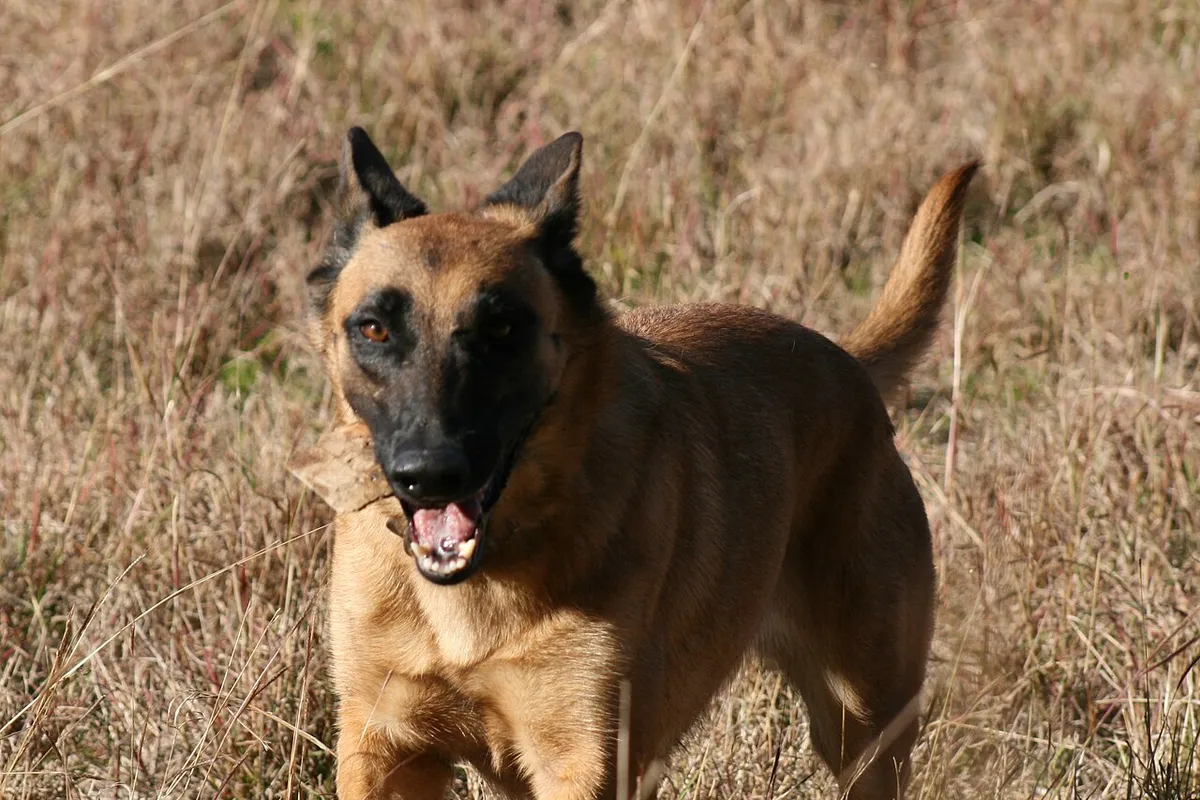
At a glance
| Trait | Detail |
|---|---|
| Origin | Belgium [1] |
| Breed group | FCI group 1, section 1 (Sheepdogs), as one of the four varieties of the Belgian Shepherd Dog [1]; AKC Herding Group, where it is a separate breed [2] |
| Weight | Males about 55–66 lb (25–30 kg), females about 44–55 lb (20–25 kg) [1] |
| Height | Ideal 24.4 in (62 cm) for males and 22.8 in (58 cm) for females, from 2 cm (0.8 in) below to 4 cm (1.6 in) above [1] |
| Life expectancy | Median 12.0 years in a large UK study [3] |
| Coat | Short and dense, fuller around the neck; fawn with black overlay and a black mask [1] |
Origin
At the end of the 1800s Belgium had many herding dogs of varied type and coat. Professor A. Reul of the Cureghem veterinary school gathered 117 of them in 1891, the year the Belgian Shepherd Dog Club was founded in Brussels, and a first standard followed in 1892. Today the FCI recognizes one breed with four varieties judged separately: the long-haired Groenendael and Tervueren, the short-haired Malinois and the rough-haired Laekenois. Once a sheepdog, it is now used for guarding, defence and tracking, as an all-purpose service dog and as a family dog [1].
The American Kennel Club, by contrast, treats the Belgian Malinois as a breed of its own [2, 7]. It was the most common breed among the 1,230 US military working dogs discharged from service in 2019 to 2021, at 45.6% [10].
Common health problems
- Hip and elbow dysplasia: in Swedish screening X-rays of young adult dogs from 2007 to 2016, 9.0% of 1,235 Malinois had hip dysplasia (grades C to E) and 5.3% of 1,234 had elbow dysplasia, against 19.8% and 13.2% across all screened dogs. In the same study, 25.6% of German Shepherds had hip dysplasia [4].
- Heat injury: among 1,230 US military working dogs discharged from service in 2019 to 2021, German Shepherds were 74% less likely than Malinois to be discharged because of heat injury, which tended to end careers early [10].
- Spongy degeneration with cerebellar ataxia (SDCA): a severe inherited brain disease of Malinois puppies that causes loss of coordination. It has at least two recessive forms, SDCA1 (a KCNJ10 variant) and SDCA2 (an insertion in ATP1B2), and each finding provides the basis for a genetic test [5, 6].
- Early deaths of puppies (YARS2): three Malinois puppies died at 6 to 8 weeks of age without an obvious cause. A recessive YARS2 variant was perfectly associated with these deaths in 474 Belgian Shepherds, and it was most common in the Malinois variety, with an allele frequency of 16% in 383 Malinois [7].
- Degenerative myelopathy: in 72 Malinois of the Greek armed forces, 25% carried one copy of the SOD1 variant linked to this adult-onset, fatal spinal cord disease and 4% carried two copies, the genotype at high risk [8].
- Stomach cancer, mostly in the other varieties: gastric carcinoma is common in the long-haired Tervueren and Groenendael, with a 10-year cumulative incidence of 4.7% and 2.1% in the Netherlands. Only three Malinois cases were found over 15 years, although the Malinois is far more popular [9].
What is special in the Malinois’s blood work
We found no published reference intervals specific to the Malinois. Two small studies of working Malinois show how exercise and age move routine values.
After hard work. In 14 police Malinois tested before and after 60 minutes of search-and-rescue training at 27–33 °C (81–91 °F), the mean white cell count rose from 11.2 to 17.4 × 10⁹/L just after exercise and was back to 10.7 × 10⁹/L after 24 hours of rest. Red cells, platelets, creatine kinase (CK) and AST did not change; sodium, potassium and phosphorus fell and chloride rose, and every value was back to baseline after 24 hours [11]. A sample taken right after intense activity can therefore show a higher white blood cell count.
With age. In 26 male working Malinois, all blood count values stayed within the reference range. Mean creatinine was lower in dogs aged 7 to 10 years (78.6 µmol/L, about 0.89 mg/dL) than in dogs aged 2 to 6 years (88.6 µmol/L, about 1.00 mg/dL), which the authors relate to muscle mass or kidney changes with age [12]. See creatinine in dogs.
DNA tests. Variants for SDCA1 and SDCA2 [5, 6], the YARS2 variant [7] and the SOD1 variant of degenerative myelopathy [8] can be detected by genotyping.
Screening. The AKC lists hip and elbow evaluation and an eye examination by a veterinary ophthalmologist as the recommended health tests for the breed [2]. Hip and elbow scores are the checks backed by the screening data above [4].
For routine results, our guide to the blood count explains red cells, white cells and platelets line by line.
Related articles
En français : Malinois.
Questions to ask your veterinarian
- Have my dog’s hips and elbows been X-rayed and scored?
- Were the parents DNA-tested for SDCA1, SDCA2 and the YARS2 variant?
- Should my dog be tested for the SOD1 variant linked to degenerative myelopathy?
- Was this blood sample taken soon after exercise, and could that explain a high white cell count?
- How can I protect my dog from heat during training and hot weather?
Get your Malinois’s blood work explained.
AI DiagAnimals reads the blood count, the kidney and liver values and the electrolytes together with your laboratory’s intervals, and explains them in plain language. The service opens soon: leave your email to be told first.
Frequently asked questions
How long do Belgian Malinois live?
A large UK study of companion dogs found a median lifespan of 12.0 years for the Malinois [3].
Do Malinois have hip and elbow problems?
Less often than the average screened dog: in Swedish screening, 9.0% had hip dysplasia and 5.3% elbow dysplasia, against 19.8% and 13.2% across all screened dogs [4].
What DNA tests are available for Malinois?
Tests can detect the variants behind two forms of spongy degeneration with cerebellar ataxia [5, 6], the YARS2 variant linked to early deaths of puppies [7] and the SOD1 variant linked to degenerative myelopathy [8].
Are Malinois prone to heatstroke?
In US military working dogs, Malinois were more likely than German Shepherds to be retired because of heat injury [10].
Can exercise change a Malinois’s blood test?
Yes. After an hour of training in hot weather, the mean white cell count of police Malinois rose from 11.2 to 17.4 × 10⁹/L and returned to baseline within 24 hours [11].
Sources
- FCI. Standard No. 15: Chien de Berger Belge (Belgian Shepherd Dog). 2002. fci.be/Nomenclature/Standards/015g01-en.pdf
- American Kennel Club. Belgian Malinois: dog breed information. akc.org/dog-breeds/belgian-malinois
- McMillan KM et al. Longevity of companion dog breeds: those at risk from early death. Sci Rep. 2024;14:531 (supplementary table S3). doi.org/10.1038/s41598-023-50458-w
- Engdahl K et al. Prevalence of hip and elbow dysplasia in young adult dogs in Sweden. Vet Rec. 2026;198(12):e560-e573. doi.org/10.1002/vetr.70224
- Mauri N et al. A missense variant in KCNJ10 in Belgian Shepherd dogs affected by spongy degeneration with cerebellar ataxia (SDCA1). G3 (Bethesda). 2017;7(2):663-669. doi.org/10.1534/g3.116.038455
- Mauri N et al. A SINE insertion in ATP1B2 in Belgian Shepherd dogs affected by spongy degeneration with cerebellar ataxia (SDCA2). G3 (Bethesda). 2017;7(8):2729-2737. doi.org/10.1534/g3.117.043018
- Gurtner C et al. YARS2 missense variant in Belgian Shepherd dogs with cardiomyopathy and juvenile mortality. Genes (Basel). 2020;11(3):313. doi.org/10.3390/genes11030313
- Mataragka A et al. Allele and genotype frequencies of the SOD1 gene polymorphism associated with canine degenerative myelopathy in Belgian Malinois dogs in Greece. Vet World. 2021;14(6):1472-1479. doi.org/10.14202/vetworld.2021.1472-1479
- Hugen S et al. Incidence and heritability of gastric carcinoma in the Belgian Shepherd dog population in the Netherlands. Vet Sci. 2025;12(1):18. doi.org/10.3390/vetsci12010018
- Discepolo D et al. United States military working dogs from 2019 to 2021: analysis of causes of service discharge and decreased service life. Front Vet Sci. 2025;12:1580628. doi.org/10.3389/fvets.2025.1580628
- Simatupang GTTO et al. Effect of training on physiological, hematological, and chemical parameters in Belgian Malinois dogs in Indonesia’s tropical climate. Open Vet J. 2025;15(9):4024-4031. doi.org/10.5455/OVJ.2025.v15.i9.7
- Hadžimusić N, Hadžijunuzović-Alagić D. Hematological and biochemical parameters in the blood of working Belgian Shepherd dogs: an age-related study. Open Vet J. 2024;14(11):2893-2900. doi.org/10.5455/OVJ.2024.v14.i11.18
Laboratory methods and reference intervals vary. This article explains; it does not diagnose. For a decision about your pet, use the original report and talk to your veterinarian. Our editorial policy.