
 Français
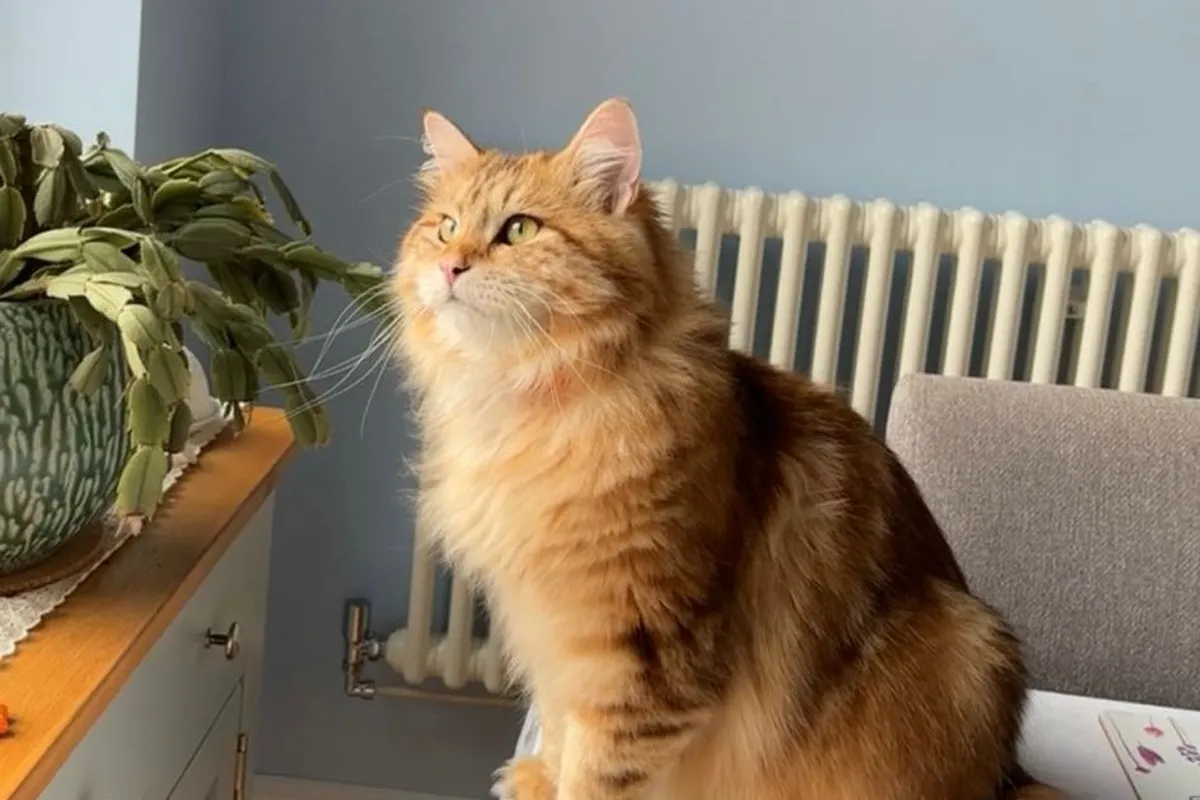
Siberian at a glance
| Trait | Detail |
|---|---|
| Origin | Russia, where its recorded history goes back to around the year 1000; the first breeding Siberians reached the United States in 1990 [1] |
| Breed group | FIFe Category 2 [2] |
| Build | Medium to medium-large, strong and heavy for its size; males 12–18 lb (5.4–8.2 kg), females 8–12 lb (3.6–5.4 kg); slow to mature, up to 5 years [1] |
| Life expectancy | No breed figure in the 2024 UK life tables, which only covered breeds with 15 or more deaths; 11.74 years at birth for all cats [3] |
| Coat | Moderately long to long triple coat, thicker in winter; all colors accepted [1] |
Origin
Considered the national cat of Russia, the Siberian lived for centuries with farmers and tradesmen, and its recorded history goes back to around the year 1000. It became known outside Russia with the first cat shows in England in the 1890s. The first breeding Siberians arrived in the United States in 1990; the Cat Fanciers’ Association accepted the breed for registration in 2000 and for championship in 2007 [1].
FIFe places the Siberian in Category 2 and recognizes its colorpoint form, the Neva Masquerade, as a separate breed [2, 6]. Siberians, like Norwegian Forest Cats and Maine Coons, descend from regional feral populations [4], and their genetic diversity was above the average of pedigree cats in a large DNA study [6].
Common health problems
- Hypertrophic cardiomyopathy (HCM): a thickening of the heart muscle, listed by the breed club among the inherited conditions Siberian breeders test for [1]. In three Siberians with HCM, no causative variant was found in eight heart genes linked to the disease in people [8]. Most cats with HCM are non-pedigree, and good prevalence data for pedigree breeds are lacking [9]. In a DNA screening, 1 of 559 Siberians carried the Maine Coon MYBPC3 variant [6].
- Polycystic kidney disease (PKD): also on the breed club’s list [1]. The PKD1 variant known from Persian-type cats was found in 1 of 559 Siberians [6]. See kidney disease in cats.
- Pyruvate kinase (PK) deficiency: an inherited red-cell enzyme defect that shortens red-cell life and causes anemia, with very variable onset and severity. Of 377 Siberians tested, 16 carried one copy of the variant and one carried two [4]. See hemolytic anemia in cats.
- Juvenile-onset motor polyneuropathy: in a family of 13 related Siberians, 4 developed weakness between 4 and 10 months of age; all recovered within 1 to 4 weeks but had at least one relapse, from which they also recovered. The pedigree suggested recessive inheritance [11].
- Urinary stones: among stones from Siberians analyzed in Germany, 36.8% were struvite, one of the breeds where struvite predominated [12]. See urinalysis for dogs and cats.
- Diabetes: in Swedish insurance data, Siberians had a low diabetes incidence (2.3 cases per 10,000 cat-years), but they were also the youngest group insured, and after adjusting for age their rate was about average [10].
Related forest breeds: see the Norwegian Forest Cat and Maine Coon pages.
Tests and screening in Siberians
- Breed reference values: in healthy Siberians and Norwegian Forest Cats, beta-2 and gamma globulins were lower than general feline reference intervals, a difference the authors considered able to cause misinterpretation; they recommended breed-specific intervals for these values [7]. See cat blood work explained.
- DNA test for PK deficiency: recommended for Siberians [4]. Affected cats can be anemic with signs such as lethargy, weakness, weight loss or jaundice [4]. See anemia in cats.
- Blood type: in a large DNA study, 1.9% of 582 Siberians were type B [6]; in a smaller survey, 2 of 27 were type B and 8 carried the B allele [5]. Mismatched transfusions and matings can cause severe reactions and destruction of the kittens’ red cells, and DNA typing tells breeders which cats carry B [5].
- Heart screening: heart ultrasound (echocardiography) is the reference test for HCM [9]. Gene tests for HCM are recommended in Maine Coons and Ragdolls, whose variants are known [9]; no Siberian variant has been identified [8]. The NT-proBNP blood test can be used when ultrasound is not available but is not recommended to tell normal cats from mild to moderate HCM [9].
- Urine: besides struvite stones [12], a variant linked to cystinuria (cystine in the urine) was found in 4 of 559 Siberians in a DNA screening [6].
Related articles
En français : Sibérien.
Questions to ask your veterinarian
- Have my cat’s parents been screened for heart disease by ultrasound, and should my cat be?
- Has my cat, or its parents, been DNA tested for PK deficiency and PKD?
- Are my cat’s globulins low, and could that be normal for a Siberian?
- Do we know my cat’s blood type?
- Is there any sign of crystals or stones in my cat’s urine?
Get your Siberian’s blood work explained.
AI DiagAnimals reads the blood count, globulins, kidney values and urinalysis with your laboratory’s intervals, compares them with earlier results and prepares the questions for your vet. The service opens soon: leave your email to be told first.
Frequently asked questions
How long do Siberian cats live?
There is no published breed figure: the 2024 UK life tables only covered breeds with 15 or more deaths, and the Siberian was not among them. The life expectancy at birth of all cats was 11.74 years [3].
What health problems do Siberian cats have?
The breed club lists hypertrophic cardiomyopathy and polycystic kidney disease among the conditions breeders test for [1]. PK deficiency carriers [4], a juvenile motor polyneuropathy in one family [11] and struvite stones [12] have also been reported.
Is there a DNA test for HCM in Siberians?
No Siberian-specific HCM variant is known: in three affected Siberians, no causative variant was found in eight heart genes [8]. Heart ultrasound is the reference test [9].
What tests should a Siberian cat have?
The PK deficiency DNA test, blood typing and heart ultrasound screening are the tests most often discussed [1, 4, 5, 9].
Why are my Siberian’s globulins low?
Healthy Siberians had lower beta-2 and gamma globulins than general feline reference intervals in an Italian study, so a low value may be normal for the breed; your vet will read it with the rest of the results [7].
Sources
- The Cat Fanciers’ Association. Siberian: breed profile. cfa.org/breed/siberian
- Fédération Internationale Féline. Breeds and standards. fifeweb.org/cats/breeds
- Teng KT et al. Life tables of annual life expectancy and risk factors for mortality in cats in the UK. J Feline Med Surg. 2024;26(5):1098612X241234556. doi.org/10.1177/1098612X241234556
- Grahn RA et al. Erythrocyte pyruvate kinase deficiency mutation identified in multiple breeds of domestic cats. BMC Vet Res. 2012;8:207. doi.org/10.1186/1746-6148-8-207
- Kehl A et al. CMAH genotyping survey for blood types A, B and C (AB) in purpose-bred cats. Anim Genet. 2019;50(3):303-306. doi.org/10.1111/age.12778
- Anderson H et al. Genetic epidemiology of blood type, disease and trait variants, and genome-wide genetic diversity in over 11,000 domestic cats. PLoS Genet. 2022;18(6):e1009804. doi.org/10.1371/journal.pgen.1009804
- Paltrinieri S et al. Haematological and biochemical reference intervals of four feline breeds. J Feline Med Surg. 2014;16(2):125-136. doi.org/10.1177/1098612X13499337
- Meurs KM et al. Analysis of 8 sarcomeric candidate genes for feline hypertrophic cardiomyopathy mutations in cats with hypertrophic cardiomyopathy. J Vet Intern Med. 2009;23(4):840-843. doi.org/10.1111/j.1939-1676.2009.0341.x
- Luis Fuentes V et al. ACVIM consensus statement guidelines for the classification, diagnosis, and management of cardiomyopathies in cats. J Vet Intern Med. 2020;34(3):1062-1077. doi.org/10.1111/jvim.15745
- Öhlund M et al. Incidence of diabetes mellitus in insured Swedish cats in relation to age, breed and sex. J Vet Intern Med. 2015;29(5):1342-1347. doi.org/10.1111/jvim.13584
- Crawford KC et al. Juvenile-onset motor polyneuropathy in Siberian cats. J Vet Intern Med. 2020;34(6):2595-2604. doi.org/10.1111/jvim.15963
- Breu D, Müller E. Feline uroliths: analysis of frequency and epidemiology in Germany (2016-2020) [in German]. Tierarztl Prax Ausg K Kleintiere Heimtiere. 2022;50(2):102-111. doi.org/10.1055/a-1795-8078
Laboratory methods and reference intervals vary. This article explains; it does not diagnose. For a decision about your pet, use the original report and talk to your veterinarian. Our editorial policy.